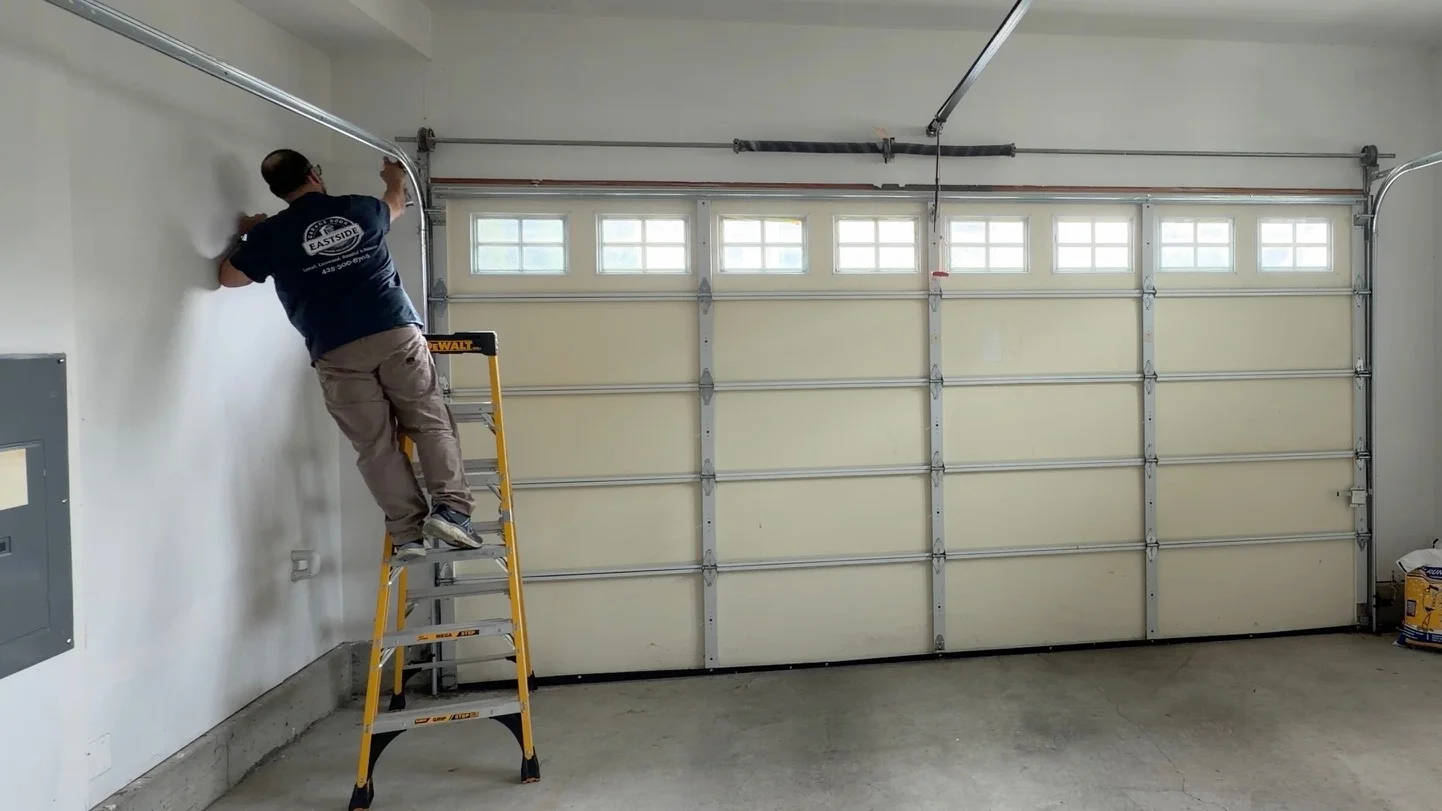
You hit the button. The door starts to lower. Gets halfway down, maybe three-quarters — then reverses and goes back up. You try again. Same thing.
This is frustrating, but it's usually fixable — and the most common cause is something small.
Start Here: The Safety Sensors
At the base of your garage door tracks, there are two small photo-eye sensors — one on each side. They emit an invisible beam across the door opening. If anything breaks that beam, the door reverses.
That's intentional. It's the safety feature that stops the door from closing on a child, a pet, or your car bumper.
The problem: these sensors are sensitive. Dirty lenses, a slight bump from a rake handle, a spider web, even a leaf can trigger a false reversal.
Check this first. Look at both sensors — they should each have a solid indicator light, usually green and amber. If either light is blinking or off, the beam is broken. Clean the lenses with a dry cloth and check the alignment. Both sensors need to point directly at each other.
If the lights go solid after cleaning and realigning, test the door. This fixes the problem roughly half the time. If the door still stops short or reverses, the issue is probably not just a dirty sensor.

If It's Not the Sensors: Other Causes
Misadjusted Travel Limits
The opener has a setting for how far down the door should travel before stopping. If that limit is set too short, the door stops before it seals. This is an opener adjustment, not a hardware failure. See our garage door opener repair page if the opener is the likely issue.
Bent Tracks or Worn Rollers
A roller that's popped out of the track, or a track that's been bumped out of alignment, creates resistance the opener interprets as an obstruction. Door reverses. This is also where a basic garage door tune-up can catch the problem before the door fully fails.
Weak or Failing Springs
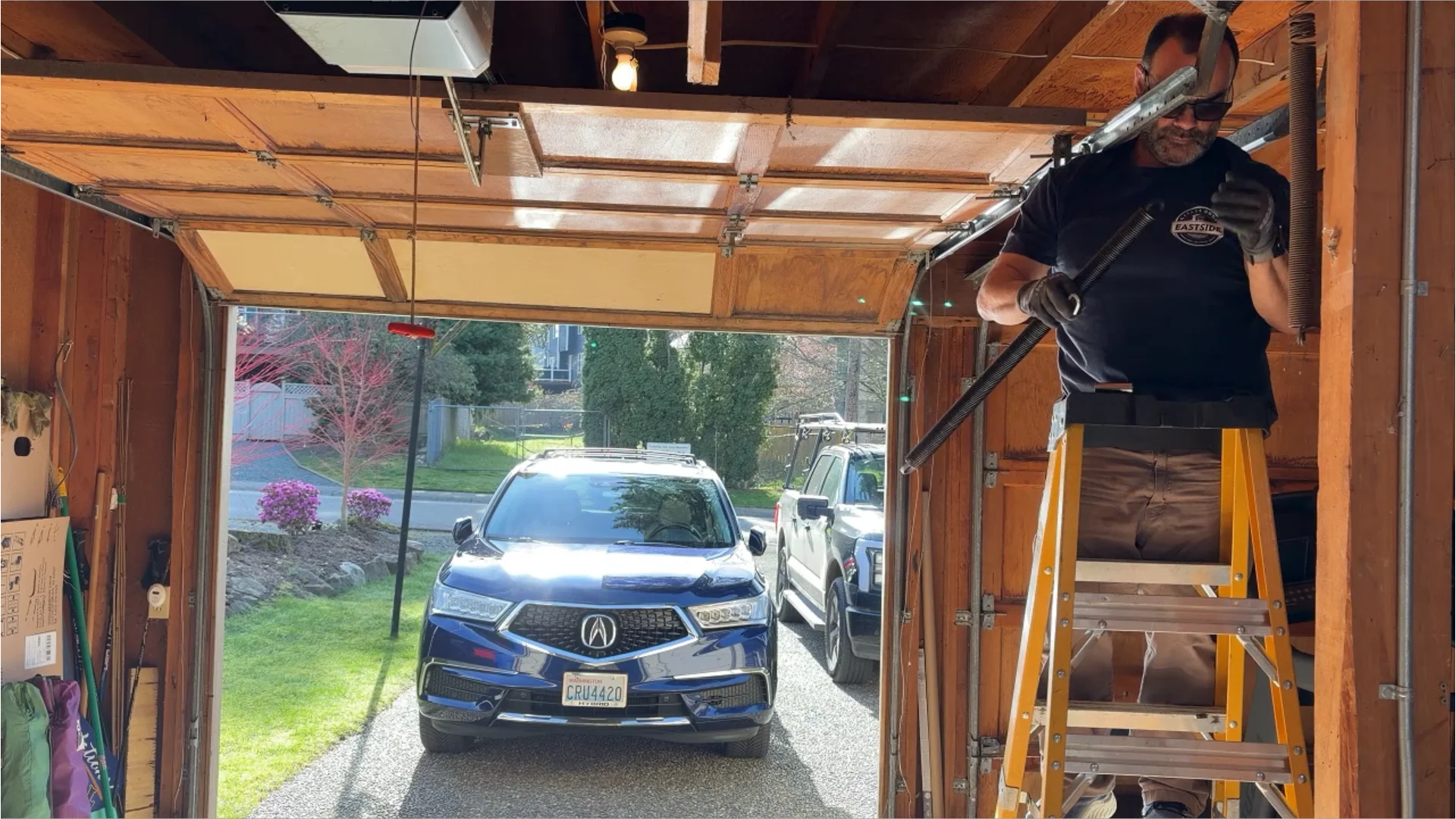
Springs that are losing tension change how the door moves. The opener detects irregular resistance and stops the door to protect itself. If the door feels heavier than usual or opens unevenly, the springs need to be checked. Read more about spring replacement.
Opener Motor Fatigue
Older openers, especially chain drives, develop sensitivity issues as they age. The motor's force sensing gets inaccurate, causing it to think there's resistance when there isn't.
"He got here when he said he would be, and replaced the broken spring on the garage door and was gone 45 minutes later!! He went above and beyond to get here."
Why This Is Common in Issaquah
We see this call pattern frequently in Issaquah, particularly in neighborhoods like Talus and Issaquah Highlands where attached garages face north or west. Moisture builds up on sensors during fall and winter. Tracks settle slightly as homes age on hillside lots. It's not a design flaw — it's the environment doing what it does.
We also see the same issue in Sammamish and other Eastside neighborhoods where moisture, tree cover, and attached garages all stack the odds against sensor alignment and clean operation.
A door that reverses is usually trying to protect itself. The question is whether it's reacting to a real obstruction, bad alignment, or a mechanical problem the opener is sensing.
What to Do Before You Call
Start simple: wipe both sensor lenses with a dry cloth, remove anything sitting near the track, and make sure both indicator lights are solid. Then test the door once.
If the door still reverses, stop forcing it. Repeatedly running the opener against resistance can create a bigger repair than the one you started with. Call (425) 500-6708 and describe exactly what the door does. We can usually narrow it down over the phone, or you can start with our garage door repair page if you want the broader repair overview.